 SA 190
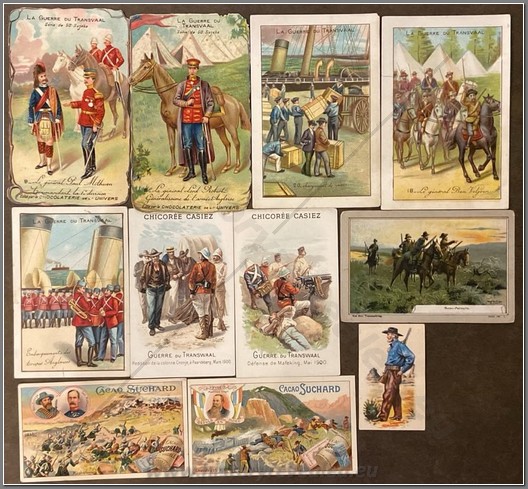
11 European confectionary cards on the Boer War. Confectioners include Chicoree Casiez, Emil Seelig, Cacao Suchard, Chocolaterie de le Univers, Biscuits Germain, C. Beriot a Lille and an unidentified one.
Price: $0.00

SA 190
11 European confectionary cards on the Boer War. Confectioners include Chicoree Casiez, Emil Seelig, Cacao Suchard, Chocolaterie de le Univers, Biscuits Germain, C. Beriot a Lille and an unidentified one.
Price: $0.00
 SA 189
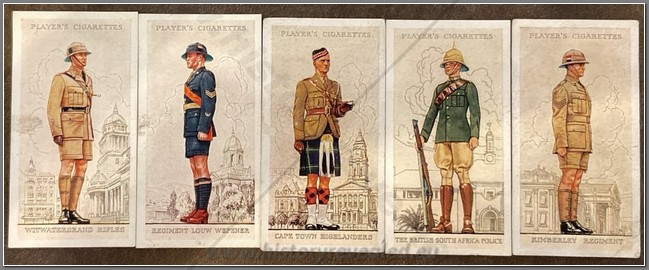
5 Player’s Cigarette cards on South Africa military and police units.
Price: $150.00
 SA 188
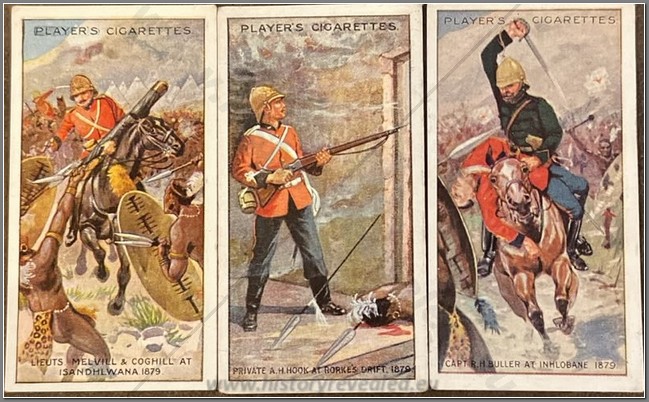
3 Player’s Cigarette cards on VC recipients from the 1879 Zulu War.
Price: $90.00
 SA 187
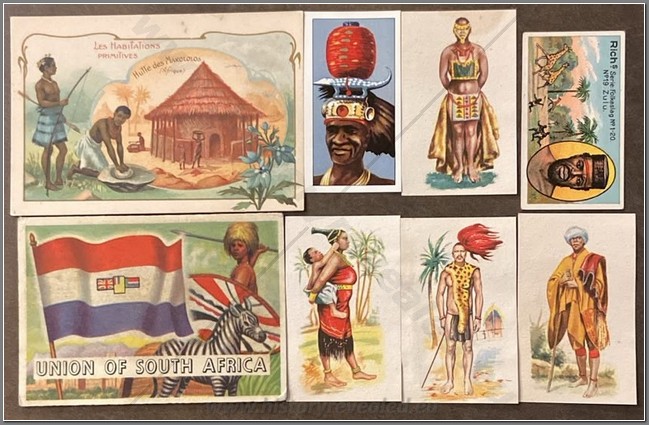
8 early European confectionary cards featuring South Africans. Confectioners include Rich’s Kaffe, Ringtons Limited, A&BC Gum and some unidentified.
Price: $240.00
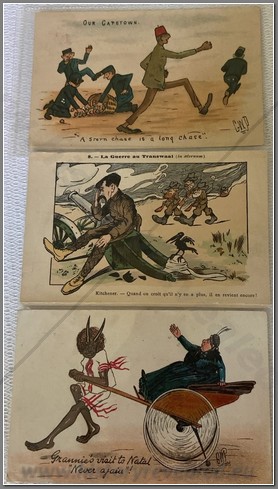 SA 186
Three early 20th century humor postcards of South Africa. SOLD
Price: $90.00
 SA 185
 SA 185
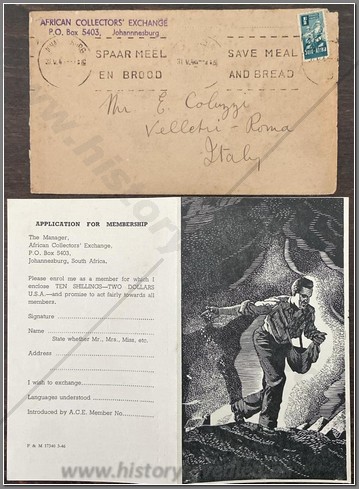
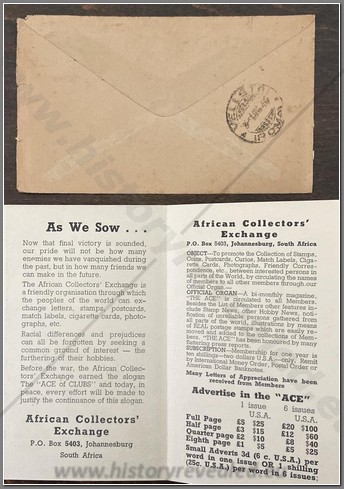
Membership invitation to join the AFRICA COLLECTORS’ EXCHANGE, based in Johannesburg, South Africa. Stamped 1946, the cover envelope (with original war time stamp) states “SAVE MEAL AND BREAD” in both English and Afrikaan, reflecting the rationing in early post-war South Africa. It reads, in part, “The African Collectors’ Exchange is a friendly organization through which the peoples of the world can exchange letters, stamps, postcards, match labels, cigarette cards, photographs, etc. Racial differences and prejudices can all be forgotten by seeking a common ground of interest……
Price: $120.00
 SA 181
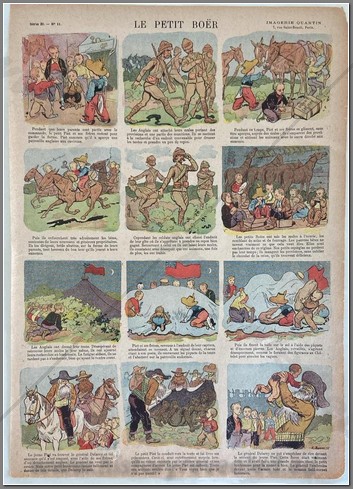
Late 19th/early 20th century Pellerin print by Imagerie D’Epinal. Titled Le Petit Boer. It is a story of how a Boer child named Piet, along with his young friends, captured British soldiers while they slept. The last frame reads: “General Delarey couldn't help but laugh at young Piet's seriousness. The prank was truly funny, and it had taken a great deal of determination from the little fellow to pull it off. The general embraced him in front of the entire Boer army and appointed him honorary field cornet.”
Price: $200.00
NOTE: The Imagerie d'Épinal ( Vosges ) was originally a printing house founded in 1796 by Jean-Charles Pellerin and where the first images of Épinal were engraved in series. Initially a craft, Epinal imagery gradually became a real industry. The imagery initially used an image engraved in a wooden block ( xylography ). The sheet was then printed using a hand press, called a " Gutenberg ". Then the colorist intervened: using stencils, he applied the different colors necessary to finish the work with a round brush. Around 1850 , the appearance of lithography offered greater possibilities to the artist. Nevertheless, the images of Épinal still represented only 2% of the volume of images peddled in 1860. From 1829 to 1845, the imagery celebrated the Emperor Napoleon Bonaparte, his family, his marshals, his armies and his victories. Under the influence of Rousseauist thought, mid- nineteenth - century society began to see children as consumers. Riddles, dolls to assemble, and soldiers entered the catalog of imagery. At the dawn of the 20th century, the production of imagery was known throughout the world. Puppets, paper theatres, constructions and then, during the First World War , military subjects were all areas where dissemination was significant.
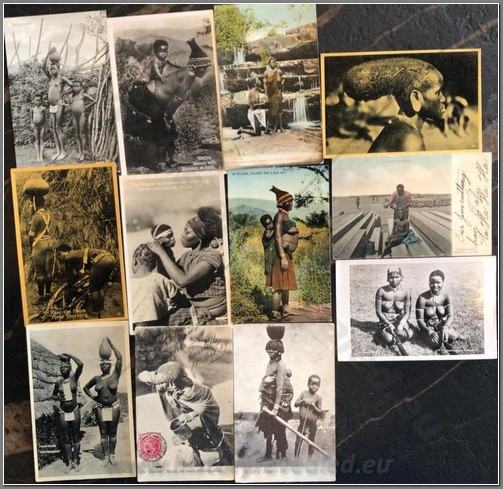 SA 180
12 colonial postcards of disparaging images of native South Africans.
Price: $360.00
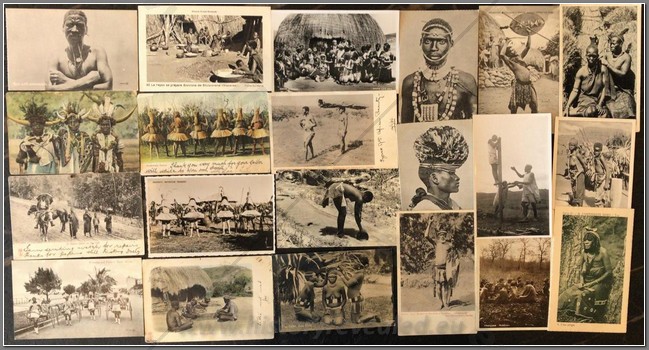 SA 179
21 colonial postcards of native habits in South Africa. Shown are hair dressing, sorceress, witch doctor, carrying mealies, markets, drawing water, native wedding, g mealies, markets, drawing water, native wedding, local initiation, food preparation, dancing, ricksha boys, form of greeting, male adornments
Price: $0.00
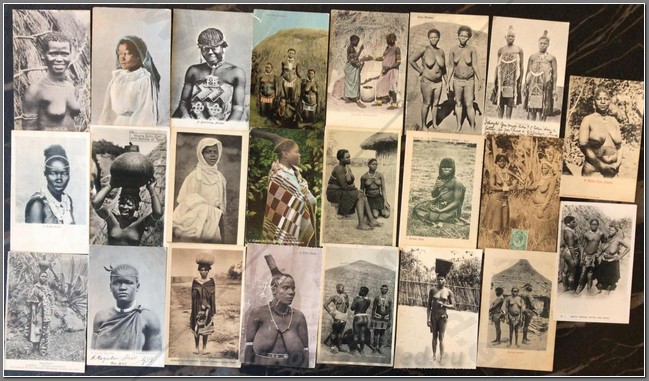 SA 177
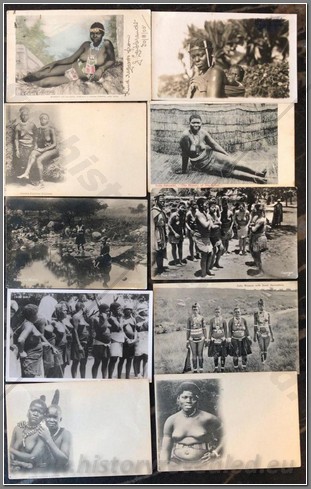 SA 177
33 colonial postcards of Zulu women and their habits.
Price: $1020.00