 MR 343
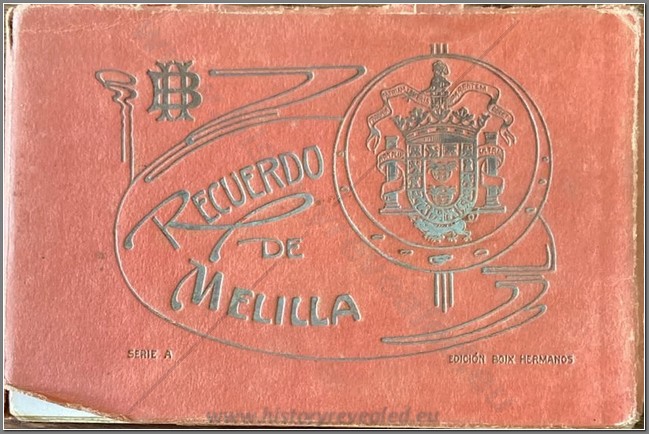
Rare vintage booklet of 25 postcards of Melilla, produced in Melilla. Series A. SOLD
Price: $300.00

MR 343
Rare vintage booklet of 25 postcards of Melilla, produced in Melilla. Series A. SOLD
Price: $300.00
 MR 342
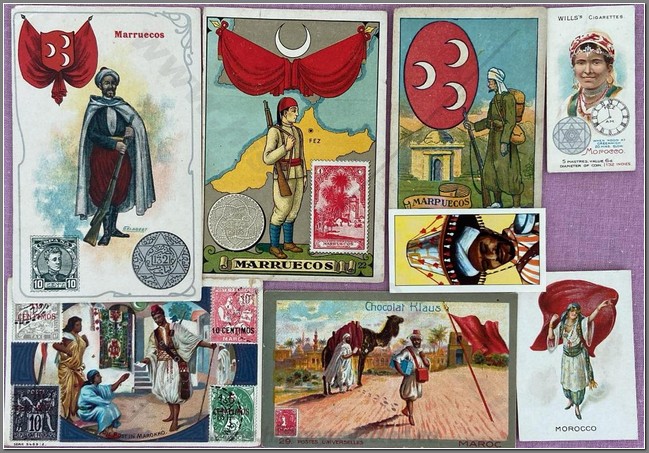
21 vintage European chromos on Morocco. Confectioners include Albert Cigarettes, Will’s Cigarettes, Ringtons Limited, Chocolates Torras, Chocolat Klaus, United Services, Lion Noir and unknown sources. .
Price: $630.00
 MR 341
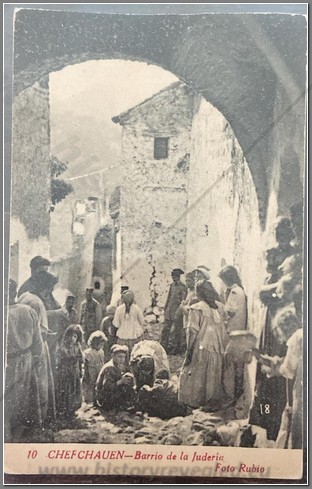
Colonial postcard of the Jewish Quarter in Chefchauen, Morocco. SOLD
Price: $40.00
 MR 340
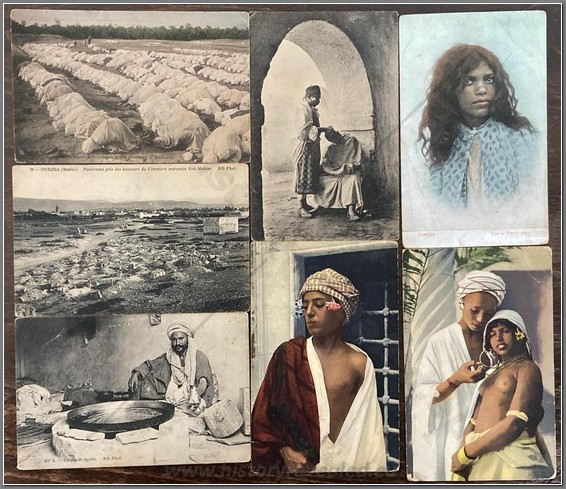
7 colonial postcards mailed from Melilla between1912 and1914. The postcards were all sent by Jose Galve to his family estate in Barcelona during the Kert campaign. (Note: In 1929 Jose Galve was the Lieutenant Judge in charge of the Alcantara Cavalry Regiment, 14th Cavalry, based in Ceuta, Morocco. See https://www.boe.es/gazeta/dias/1929/09/12/pdfs/C00193-00208.pdf SOLD
Price: $210.00
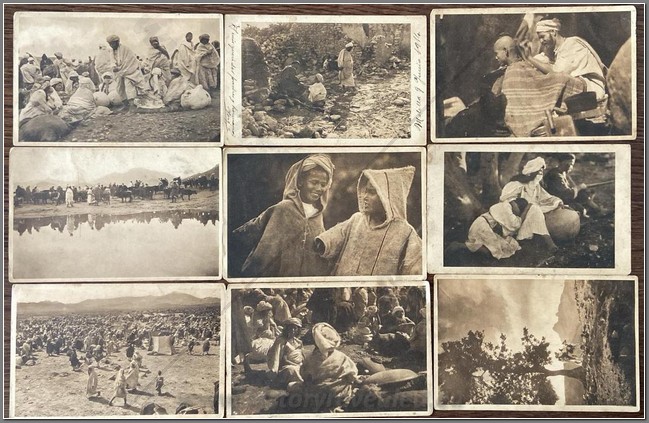 MR 339
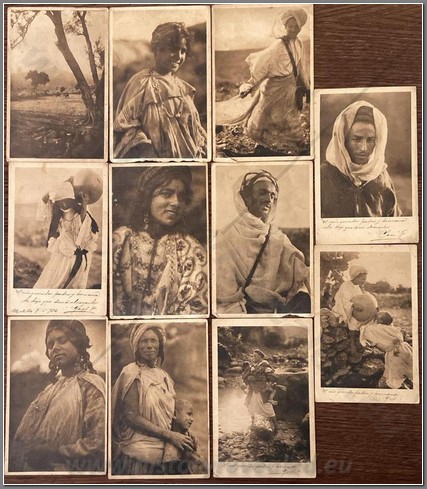 MR 339
A collection of 21 postcards titled El Rif, by photographer J. Ortiz Echague. Shows views and types of Morocco issued in 1914, in the immediate aftermath of the Kert campaign. The postcards were all sent by Jose Galve to his family estate in Barcelona during the Kert campaign. (Note: In 1929 Jose Galve was the Lieutenant Judge in charge of the Alcantara Cavalry Regiment, 14th Cavalry, based in Ceuta, Morocco. See https://www.boe.es/gazeta/dias/1929/09/12/pdfs/C00193-00208.pdf SOLD
Price: $1650.00
NOTE: José Ortiz Echagüe (1886-1980) travelled to Rif for the first time in 1909 where he realised aerial images as a member of the photography service of the Spanish Army. But even from these heights Ortiz remained down to earth. Concurrently, he began to portray local realities; capturing the life, landscapes and customs of the region. Somewhere between documentation and anthropology, his work embraces the emotion of Pictorialism, but without the allegory or literary evocation usually associated with this movement. His photographs of Fez and Tetuan are a good example of this.
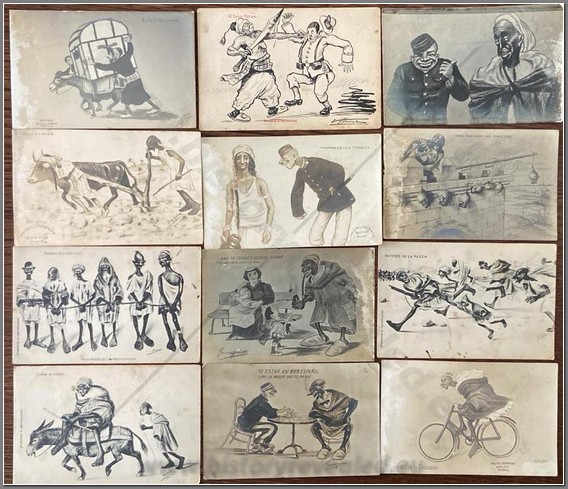 MR 338
A collection of 55 Spanish Moroccan humor postcards issued between 1912-1914, in the immediate aftermath of the Kert campaign. The postcards were all sent by Jose Galve to his family estate in Barcelona during the Kert campaign. (Note: In 1929 Jose Galve was the Lieutenant Judge in charge of the Alcantara Cavalry Regiment, 14th Cavalry, based in Ceuta, Morocco. See https://www.boe.es/gazeta/dias/1929/09/12/pdfs/C00193-00208.pdf SOLD
Price: $1650.00
NOTE FROM WIKIPEDIA: The Kert campaign was a conflict in northern Morocco between Spain and insurgent Riffian harkas led by Mohammed Ameziane, who had called for a jihad against the Spanish occupation in the eastern Rif. It took place between 1911 and 1912. The campaign saw the introduction of the tropas regulares indígenas ("native regular troops"), created by Dámaso Berenguer on 30 June 1911. The campaign followed a revolt initiated by Mohammed Ameziane, caïd of Segangan, who had called for a jihad and had attacked both Spanish and tribes friendly to them. After an attack on a group of Spanish military personnel undertaking topographic works at a position near Ishafen (near the river Kert) the Spanish campaign formally started on 24 August. However, a Spanish column had been already attacked on 30 June.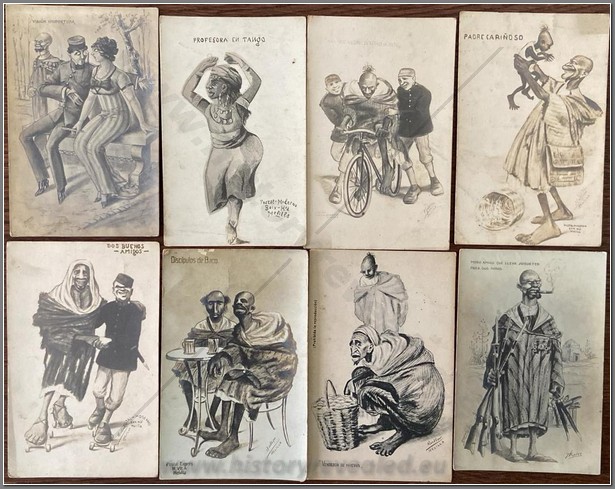 MR 338
Following a visit to Melilla, Spanish War Minister Agustín Luque took control of the operations on 7 October, and the struggles brought numerous losses to both sides, 64 death and 204 wounded on the Spanish side. On 14 October 1911 General Salvador Díaz Ordóñez was killed in action and a column commanded by General Navarro suffered 33 deaths and 105 wounded. The Spanish forces took the position of Al Aaroui (Monte Arruit) on 18 January 1912. The Spanish ended the campaign following the killing of Ameziane by native regulares on 15 May 1912. Si Mohammed Bourhayl replaced him but surrendered soon after. The Spanish losses by that time amounted to about 500 killed and 1,900 wounded. The Spanish control line was extended to the Kert River and the new boundaries for the Spanish-occupied territory entailed the annexation of the Berber cabiles of Aith Sidel and Aith Bouyafar.
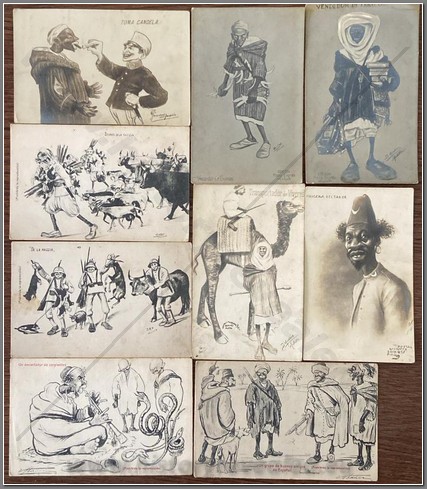 MR 338 MR 338 | 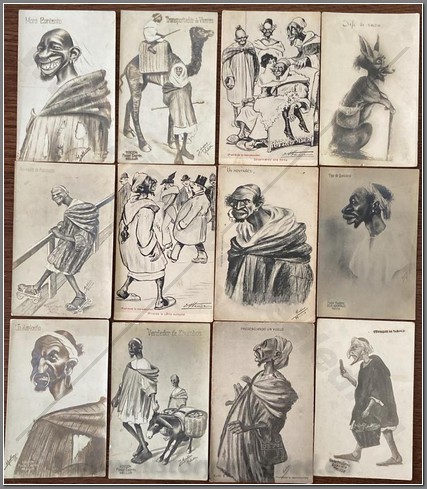 MR 338 MR 338 | 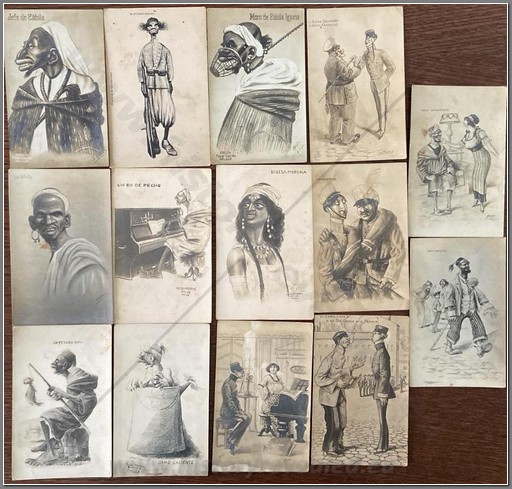 MR 338 MR 338 |
 MR 337
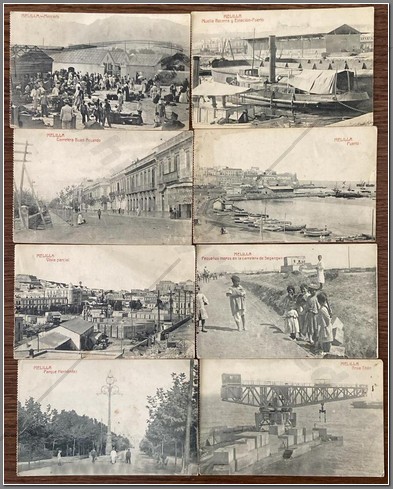
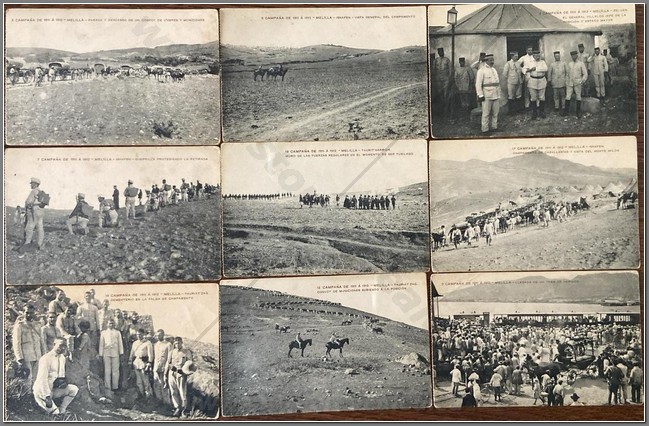
8 postcards of scenes and views of Melilla during the height of the Kert campaign. The postcards were all sent by Jose Galve to his family estate in Barcelona during the Kert campaign. (Note: In 1929 Jose Galve was the Lieutenant Judge in charge of the Alcantara Cavalry Regiment, 14th Cavalry, based in Ceuta, Morocco. See https://www.boe.es/gazeta/dias/1929/09/12/pdfs/C00193-00208.pdf SOLD
Price: $240.00
NOTE FROM WIKIPEDIA: The Kert campaign was a conflict in northern Morocco between Spain and insurgent Riffian harkas led by Mohammed Ameziane, who had called for a jihad against the Spanish occupation in the eastern Rif. It took place between 1911 and 1912. The campaign saw the introduction of the tropas regulares indígenas ("native regular troops"), created by Dámaso Berenguer on 30 June 1911. The campaign followed a revolt initiated by Mohammed Ameziane, caïd of Segangan, who had called for a jihad and had attacked both Spanish and tribes friendly to them. After an attack on a group of Spanish military personnel undertaking topographic works at a position near Ishafen (near the river Kert) the Spanish campaign formally started on 24 August. However, a Spanish column had been already attacked on 30 June.
Following a visit to Melilla, Spanish War Minister Agustín Luque took control of the operations on 7 October, and the struggles brought numerous losses to both sides, 64 death and 204 wounded on the Spanish side. On 14 October 1911 General Salvador Díaz Ordóñez was killed in action and a column commanded by General Navarro suffered 33 deaths and 105 wounded. The Spanish forces took the position of Al Aaroui (Monte Arruit) on 18 January 1912. The Spanish ended the campaign following the killing of Ameziane by native regulares on 15 May 1912. Si Mohammed Bourhayl replaced him but surrendered soon after. The Spanish losses by that time amounted to about 500 killed and 1,900 wounded. The Spanish control line was extended to the Kert River and the new boundaries for the Spanish-occupied territory entailed the annexation of the Berber cabiles of Aith Sidel and Aith Bouyafar.
 MR 336
21 postcards of the 1911-1912 military campaign in Melilla. Several generals mentioned by name, military convoys, artillery in action, distributing munitions, more. The postcards were all sent by Jose Galve to his family estate in Barcelona during the Kert campaign. (Note: In 1929 Jose Galve was the Lieutenant Judge in charge of the Alcantara Cavalry Regiment, 14th Cavalry, based in Ceuta, Morocco. See https://www.boe.es/gazeta/dias/1929/09/12/pdfs/C00193-00208.pdf Galve describes the sadness of seeing fellow soldiers retreating, the sad faces, Moorish prisoners, the Moors still occupying a position, the sadness of a rail car full of fallen soldiers, the sadness of the soldiers, the living conditions of the officers, the place of a Moorish defeat. SOLD
Price: $630.00
NOTE FROM WIKIPEDIA: The Kert campaign was a conflict in northern Morocco between Spain and insurgent Riffian harkas led by Mohammed Ameziane, who had called for a jihad against the Spanish occupation in the eastern Rif. It took place between 1911 and 1912. The campaign saw the introduction of the tropas regulares indígenas ("native regular troops"), created by Dámaso Berenguer on 30 June 1911. The campaign followed a revolt initiated by Mohammed Ameziane, caïd of Segangan, who had called for a jihad and had attacked both Spanish and tribes friendly to them. After an attack on a group of Spanish military personnel undertaking topographic works at a position near Ishafen (near the river Kert) the Spanish campaign formally started on 24 August. However, a Spanish column had been already attacked on 30 June.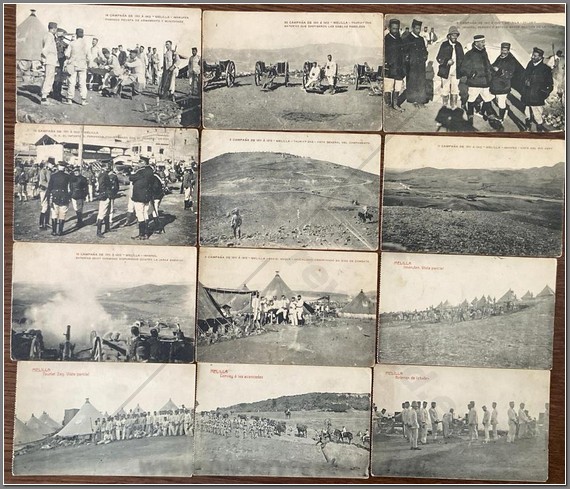 MR 336
Following a visit to Melilla, Spanish War Minister Agustín Luque took control of the operations on 7 October, and the struggles brought numerous losses to both sides, 64 death and 204 wounded on the Spanish side. On 14 October 1911 General Salvador Díaz Ordóñez was killed in action and a column commanded by General Navarro suffered 33 deaths and 105 wounded. The Spanish forces took the position of Al Aaroui (Monte Arruit) on 18 January 1912. The Spanish ended the campaign following the killing of Ameziane by native regulares on 15 May 1912. Si Mohammed Bourhayl replaced him but surrendered soon after. The Spanish losses by that time amounted to about 500 killed and 1,900 wounded. The Spanish control line was extended to the Kert River and the new boundaries for the Spanish-occupied territory entailed the annexation of the Berber cabiles of Aith Sidel and Aith Bouyafar.
 MR 335
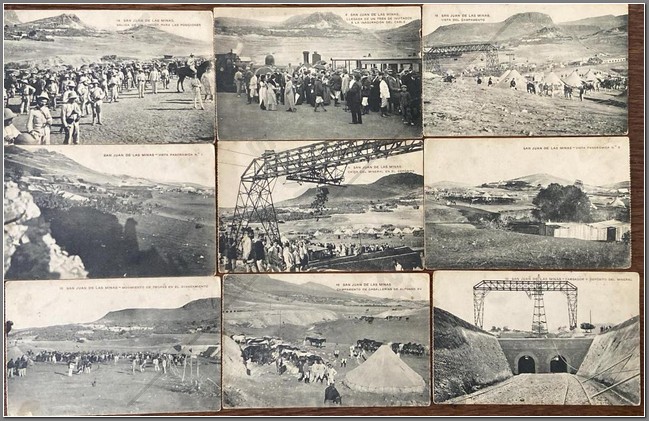
27 postcards of the mining operations at Nador and San Juan de Las Minas and the military operations there to protect the railway workers. Shown are mining operations, railroad construction, military protection. The postcards were all sent by Jose Galve to his family estate in Barcelona during the Kert campaign. (Note: In 1929 Jose Galve was the Lieutenant Judge in charge of the Alcantara Cavalry Regiment, 14th Cavalry, based in Ceuta, Morocco. See https://www.boe.es/gazeta/dias/1929/09/12/pdfs/C00193-00208.pdf
Price: $810.00
NOTE: In 1908, shortly after the Algeciras Conference, the Spanish Rif Mining Company was established, which acquired the rights to the Uixán and Axara mines and the right to build a 30-kilometer railway from the San Juan de las Minas deposits, near Segangan, to Melilla. The mining village of San Juan de las Minas is located near Segangan (Beni-Bu-Ifrur tribe), in the province of Nador. It was home to 80 to 100 working-class families. Two kilometers further up the road were the Uixán mines, which included a large building for employees, the office-house called San Jerónimo, another group of houses, an abandoned fort on a hill, and other dwellings on a rise called El Carmen, where civilian families lived.
The rescue operation for the workers building the railway to San Juan de las Minas was the first Spanish military operation of the 20th century . It took place near Melilla on July 9, 1909, at the beginning of the Melilla War. On this same day, a group of Rifians attacked Spanish workers who were working on the construction of the railway of the Spanish Rif MinIng Company, trying to capture them in order to exchange them for the Rifians captured by General Pedro del Real on July 3 during a punitive operation on Zoco el Arbáa , Charrauit and Lehadara.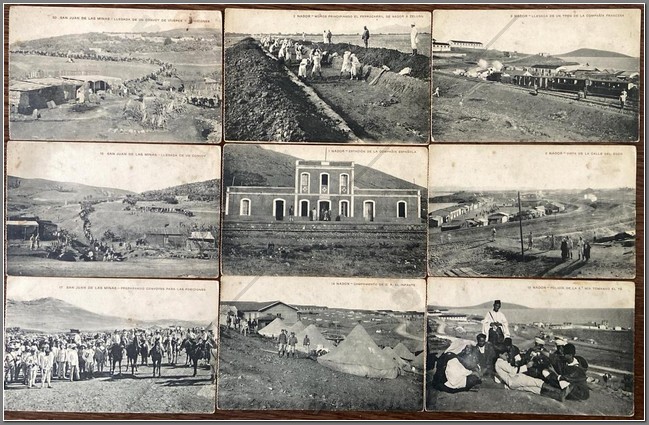 MR 335
The CEMR (Melilla Mining Company) created two cities, San Juan de Las Minas and Uixan, and shaped the Melilla landscape, conditioning it to the need for mineral exports. The railway lines, the ore loading dock, and the bridges are still visible scars of that economic policy. All existing space was adapted to the need to transport one million tons of iron ore annually from the Rif region. The CEMR was a company that controlled absolutely everything, and only the Franciscans, in its early days, and later the unions during the Republican era, offered resistance. Working conditions were akin to slavery, leading to many bitter conflicts. The exploitation of the mine did not result in economic benefits or social development for the area, as the profits and dividends went entirely to the shareholders and owners of CEMR.
NOTE FROM WIKIPEDIA: The Kert campaign was a conflict in northern Morocco between Spain and insurgent Riffian harkas led by Mohammed Ameziane, who had called for a jihad against the Spanish occupation in the eastern Rif. It took place between 1911 and 1912. The campaign saw the introduction of the tropas regulares indígenas ("native regular troops"), created by Dámaso Berenguer on 30 June 1911. The campaign followed a revolt initiated by Mohammed Ameziane, caïd of Segangan, who had called for a jihad and had attacked both Spanish and tribes friendly to them. After an attack on a group of Spanish military personnel undertaking topographic works at a position near Ishafen (near the river Kert) the Spanish campaign formally started on 24 August. However, a Spanish column had been already attacked on 30 June.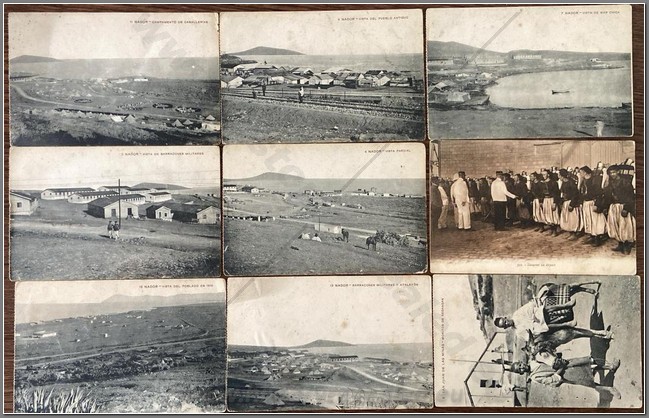 MR 335
Following a visit to Melilla, Spanish War Minister Agustín Luque took control of the operations on 7 October, and the struggles brought numerous losses to both sides, 64 death and 204 wounded on the Spanish side. On 14 October 1911 General Salvador Díaz Ordóñez was killed in action and a column commanded by General Navarro suffered 33 deaths and 105 wounded. The Spanish forces took the position of Al Aaroui (Monte Arruit) on 18 January 1912. The Spanish ended the campaign following the killing of Ameziane by native regulares on 15 May 1912. Si Mohammed Bourhayl replaced him but surrendered soon after. The Spanish losses by that time amounted to about 500 killed and 1,900 wounded. The Spanish control line was extended to the Kert River and the new boundaries for the Spanish-occupied territory entailed the annexation of the Berber cabiles of Aith Sidel and Aith Bouyafar.
 MR 334
 MR 334
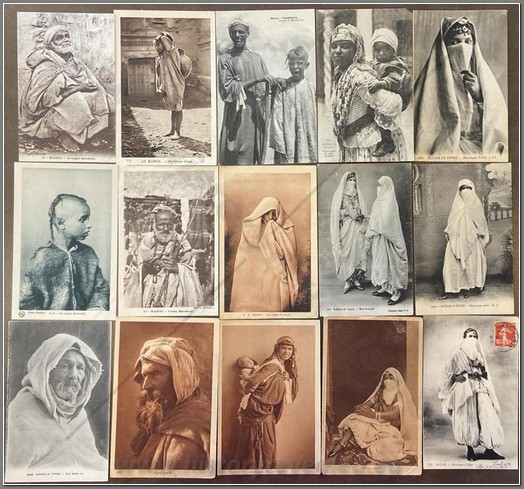
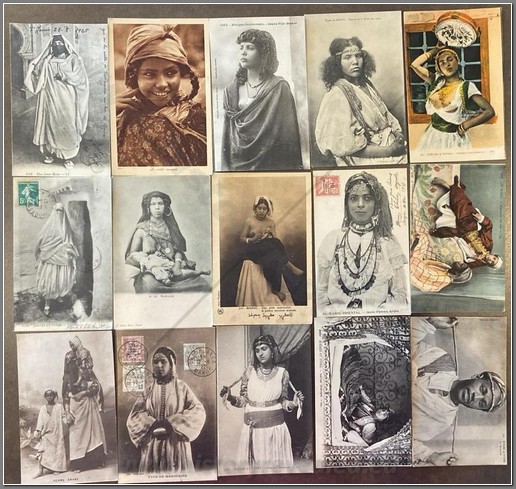
30 colonial postcards showing different male and female types of Morocco.
Price: $900.00
 MR 333
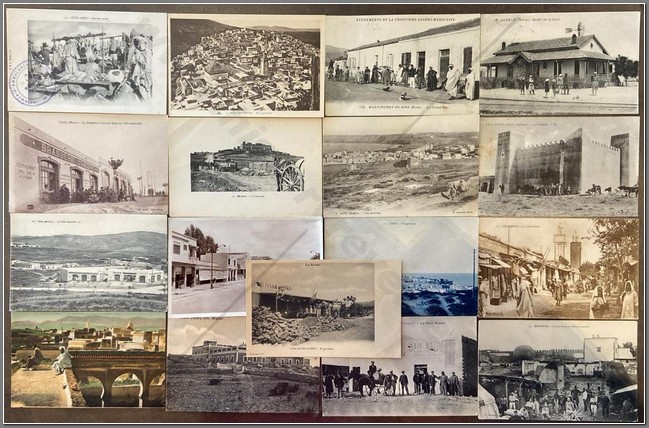
18 colonial postcards showing colonial and local life across smaller towns in Morocco. Shown are: Ben-Ahmed, Mediouna, Fez-Djedid, Tiferlanne, Guercif, Saffi, Martimprey-Du-Kiss, Mogador, Marrakech-Gueliz, Midelt, Moulay Idriss, Taza, and Oued-Amlil.
Price: $540.00
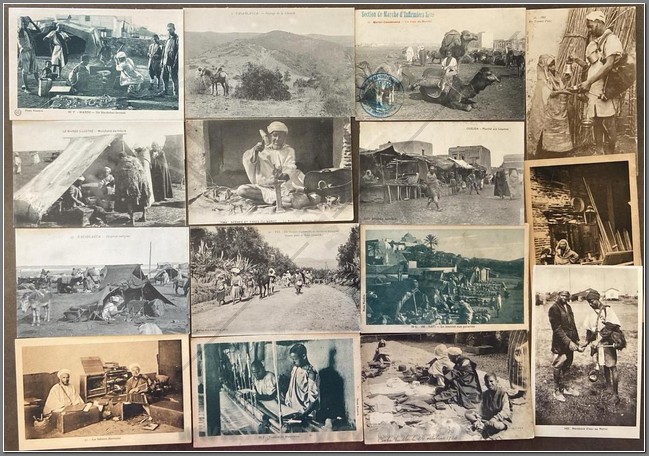 MR 332
15 colonial postcards of economic life among Moroccans. Shown are local markets, cotton weaving, water selling, carpentry, nut sellers on route to market, blacksmith, book binding.
Price: $450.00