 GS 098
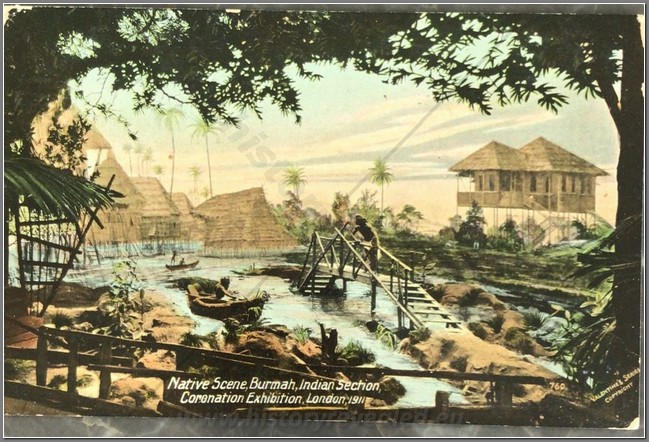
Native Burma scene at the 1911 London Coronation Exhibition.
Price: $25.00

GS 098
Native Burma scene at the 1911 London Coronation Exhibition.
Price: $25.00
 GS 097
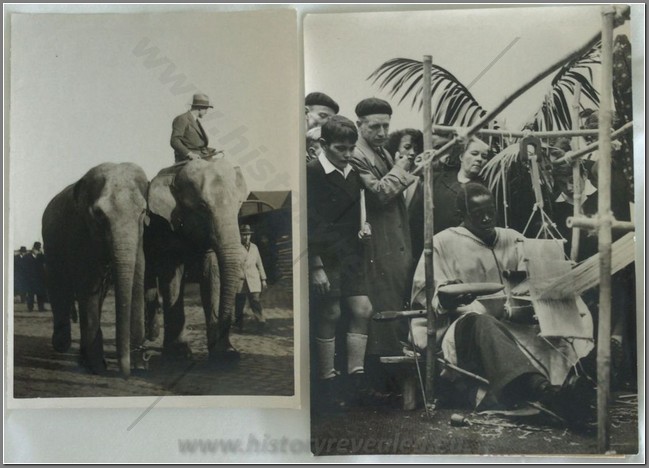
2 French press photos from the 1951 textile exhibition in Lille.
Price: $50.00
 GS 096
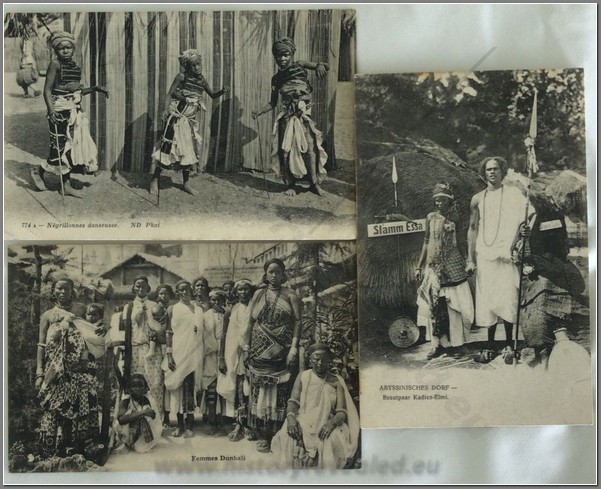
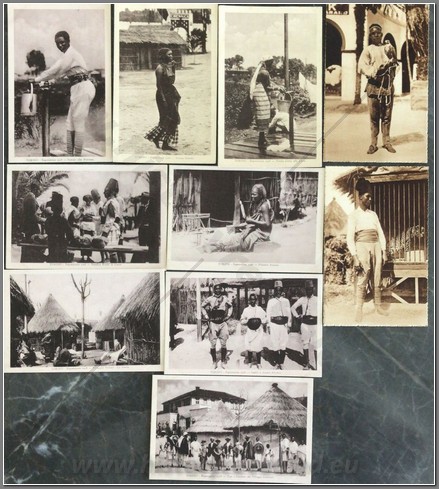
Dunkali women and “negrillonnes” dancers at a French exhibition and a “bride and groom” at an Abyssinian village in Germany. They do not look Abyssinian.
Price: $120.00
 GS 094
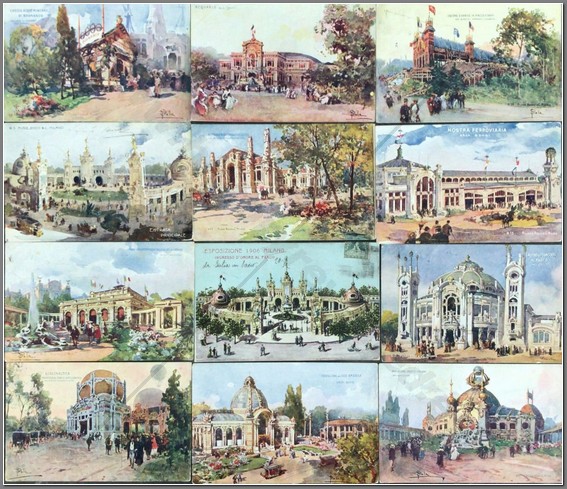 GS 094
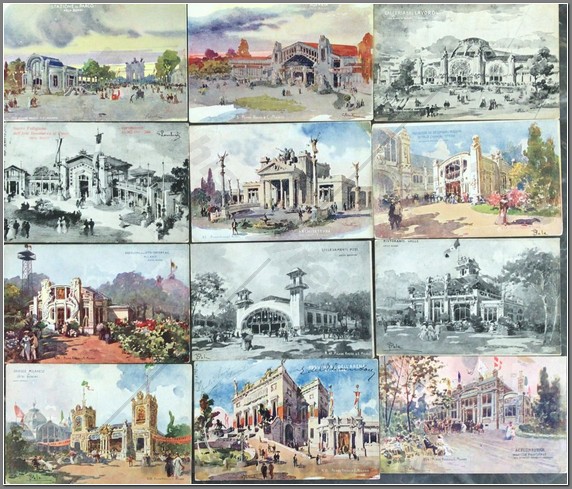
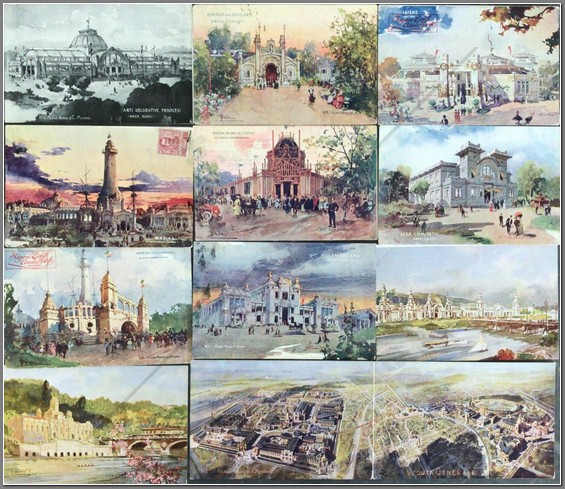
59 postcards of the 1906 Milan International Exhibition.
Price: $1800.00
Note from Wikipedia: The Milan International was a world's fair held in Milan in 1906 titled L'Esposizione Internazionale del Sempione, or sometimes The Great Expo of Work. It received 4,012,776 visits and covered 250 acres. The fair opened on 28 April 1906, ran until 31 October and marked the opening of the Simplon Tunnel. The fair was held in Sempione Park and Piazza d'Armi', with the first location hosting fine arts displays and the latter industrial and engineering exhibits, along with the foreign pavilions. Countries contributing included many from Western Europe, China, Japan, Turkey, United States, Canada and several South American countries shared a pavilion. The venues of the exposition were connected by the temporary Milan Exposition Elevated Railway. The International Commission on Occupational Health was founded at the Milan International and is still active; and the Milan aquarium was built, and is still standing.
 GS 094 GS 094 | 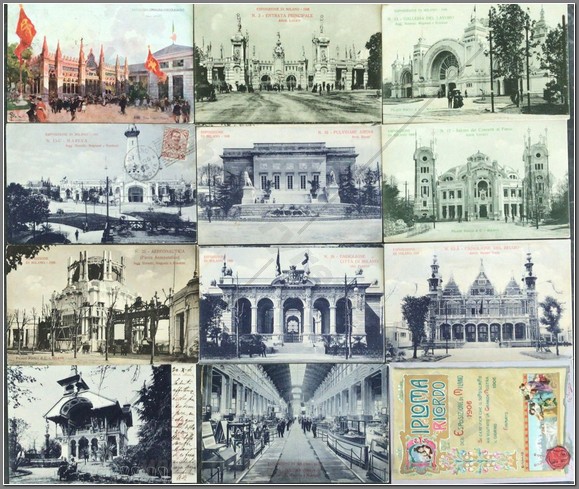 GS 094 GS 094 | 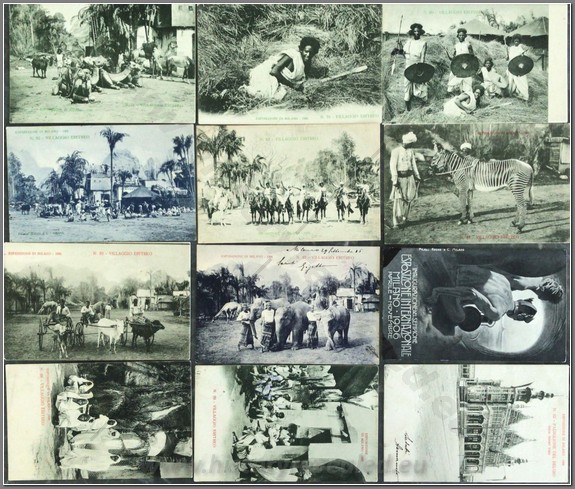 GS 094 GS 094 |
 GS 092
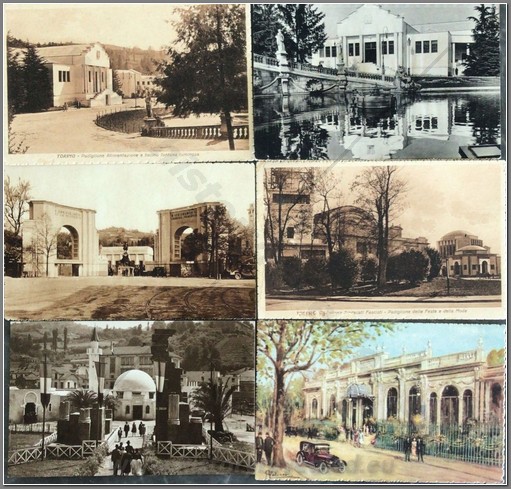
 GS 092
15 postcards of the 1928 Turin Exposition.
Price: $450.00
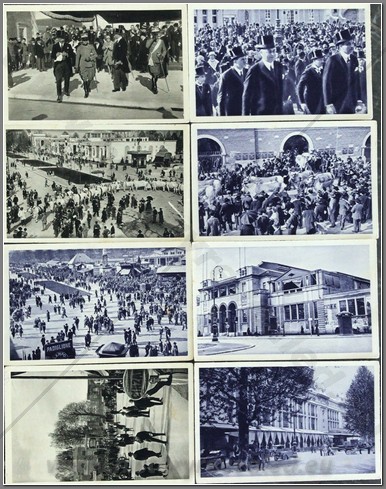 GS 090
8 postcards of the foire-exposition internationale d'echantillons de milan (milan international sample fair-exhibition). Held in Milan from April 12 to June 19, 1928.
Price: $250.00
 GS 089
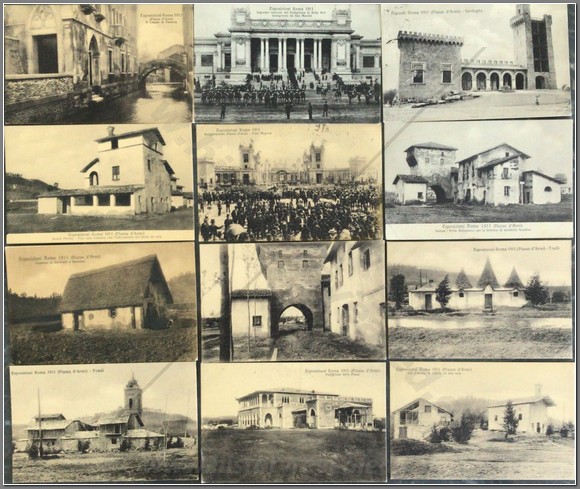
 GS 089
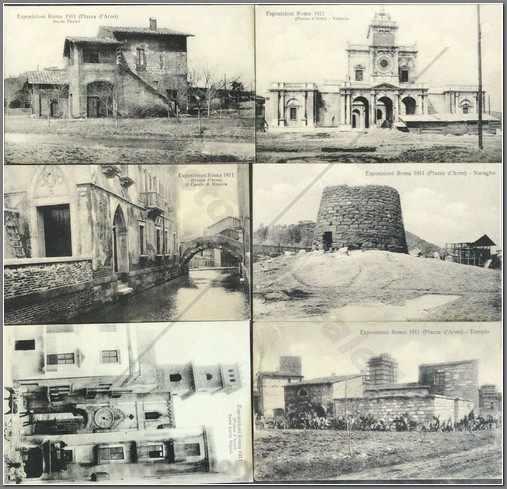
18 postcards of the 1911 Rome Exposition.
Price: $600.00
Note from Wikipedia: International Exhibition of Art (Italian: Esposizione internazionale d'arte) was a world's fair held in Rome in 1911 to celebrate the 50th anniversary of the unification of Italy in the same year as another world's fair in Turin (which had a more scientific focus). It marked the beginnings of the National Roman Museum. The fair's receipts were disappointing over the summer of 1911 because of poor weather and a cholera epidemic.
The fair was open from 29 April to 19 November 1911, and had 7,409,145 visitors.[1] The participating countries included Austria, Belgium, France, Germany, Japan, England, Russia, Serbia, Spain, USA, Hungary and Italy.
 GS 088
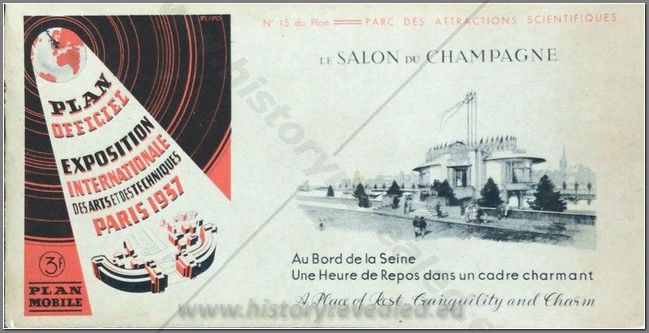
Official plan of the 1937 Paris Exposition Internationale Des Arts et des Techniques.
Price: $290.00
Note from Wikipedia: The Exposition Internationale des Arts et Techniques dans la Vie Moderne (International Exposition of Art and Technology in Modern Life) was held from 25 May to 25 November 1937 in Paris, France. Both the Palais de Chaillot, housing the Musée de l'Homme,[1] and the Palais de Tokyo, which houses the Musée d'Art Moderne de la Ville de Paris, were created for this exhibition that was officially sanctioned by the Bureau International des Expositions. A third building, Palais d'Iéna, housing the permanent Museum of Public Works, which was originally to be among the new museums created on the hill of Chaillot on the occasion of the Exhibition, was not built until January 1937 and inaugurated in March 1939.
 GS 087
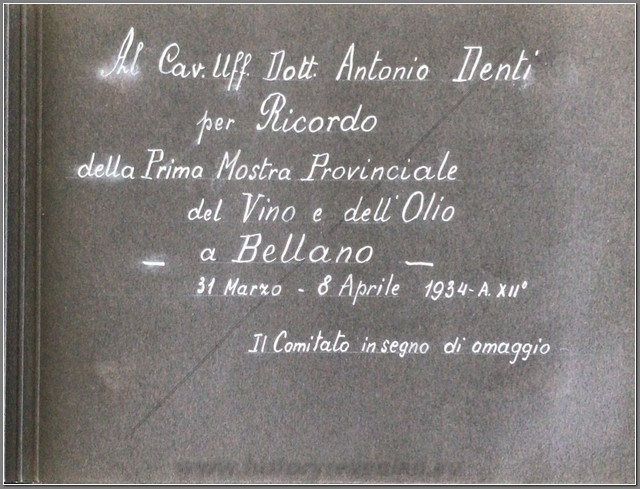
Photo album of the first oil and wine exhibition in Bellano, Italy, from March 31 to April 8, 1934. It is dedicated to Antonio Denti. 36 photos, all captioned. I cannot find any reference to this exhibition on the net.
Price: $690.00
 GS 086
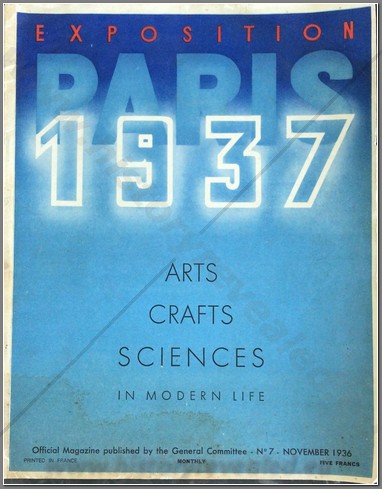
Official Magazine of the 1937 Paris Exhibition, No. 7, November 1936. Subtle cover stain.
Price: $130.00